

Bank loans aren’t the only option when it comes to commercial real estate financing. Alternatives like mezzanine financing, sale-leasebacks, crowdfunding, joint ventures, C-PACE, and private credit can offer more flexibility and terms tailored to the transaction.
However, these options tend to be more complex, which means escrow plays a bigger role in keeping the transaction on track.
Here’s a look at five non-traditional commercial real estate financing options and how each one affects the escrow process.
Mezzanine Financing
Mezzanine financing blends debt and equity. The lender takes a subordinate position in the capital stack (second in line for repayment) in exchange for a higher interest rate and additional fees.
Because the borrower doesn’t give up equity for the loan, this structure offers flexibility in interest rates and payment schedules, and in some cases, the option to conver the loan into equity later.
Escrow Considerations for Mezzanine Financing
- Escrow accounts for the mezzanine lender’s specific rights, including third-party verification of contract terms and how funds get disbursed, especially in a liquidation or sale.
- Equity conversion only triggers under conditions both parties agreed to upfront.
- The escrow agent follows the instructions in the agreement and works through any complications that come up during execution.
Sale-Leaseback Transactions
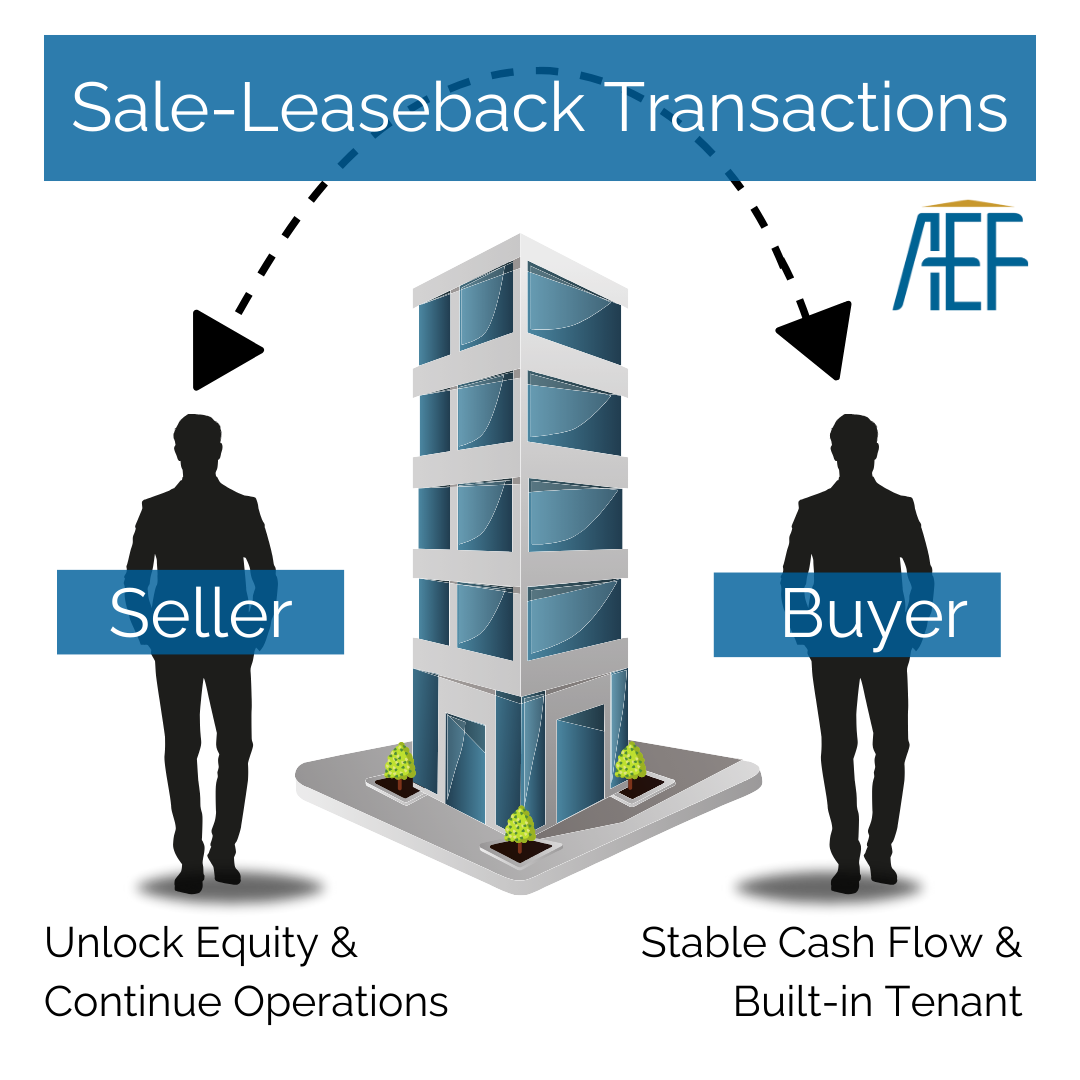
In a sale-leaseback, a building owner sells the property and immediately leases it back, often on a long-term triple-net lease. Sellers keep uninterrupted use of the space, and buyers get predictable cash flow from day one thanks to built-in rental income.
This structure is common among owners who want to unlock the equity in a building to reinvest in their core business rather than take on more debt.
Escrow Considerations for Sale-Leaseback Transactions
- Because sale-leasebacks are legally and structurally complex, each party’s counsel carefully reviews the sale and lease agreements before signing.
- Once both agreements are in place, the escrow agent handles the transfer of ownership, disbursement of funds, and execution of the lease simultaneously, per the contract.
- If the contract includes prepaid rent, security deposit terms, or property upgrades, escrow makes sure those terms are carried out as written.
Crowdfunding of Commercial Real
Under Regulation Crowdfunding (Reg CF), part of the JOBS Act of 2012, non-accredited investors can help fund commercial real estate projects.
Like a commercial REIT, crowdfunding pools investor money. However, unlike a REIT, investors choose the specific projects they want to fund. Once a project hits its funding target, the platform manages the investment, often through a special purpose entity (SPE).
Escrow Considerations for Crowdfunding of Commercial Real Estate
- Investor funds typically flow from the platform into escrow first, then to the SPE
- Escrow agents implement each platform’s specific requirements according to the agreed-upon contracts
- Funding often happens in phases, so escrow may hold and release funds incrementally as the project hits development milestones

Joint Venture Financing
In a commercial real estate joint venture, investors and developers combine resources to finance a project. It can also include two or more businesses raising funds together with a shared stake.
Pooling resources this way can make financing easier to secure and spread out risk, but it also adds complexity. More parties means more moving pieces to get right in the financing and contracting.
Escrow Considerations for Joint Venture Financing
- Detailed tracking: Each party has distinct, legally binding rights and responsibilities, including fund disbursement deadlines, repayment schedules, and construction benchmarks, all of which require close monitoring.
- Managing complex capital stacks: Joint ventures often blend multiple funding sources, from institutional lenders to private equity to seller financing, which requires precise oversight.
- Dispute mitigation: With more stakeholders involved, the odds of disagreement go up. An impartial third party like an escrow agent helps work through issues before they slow down the timeline.
CPACE Financing
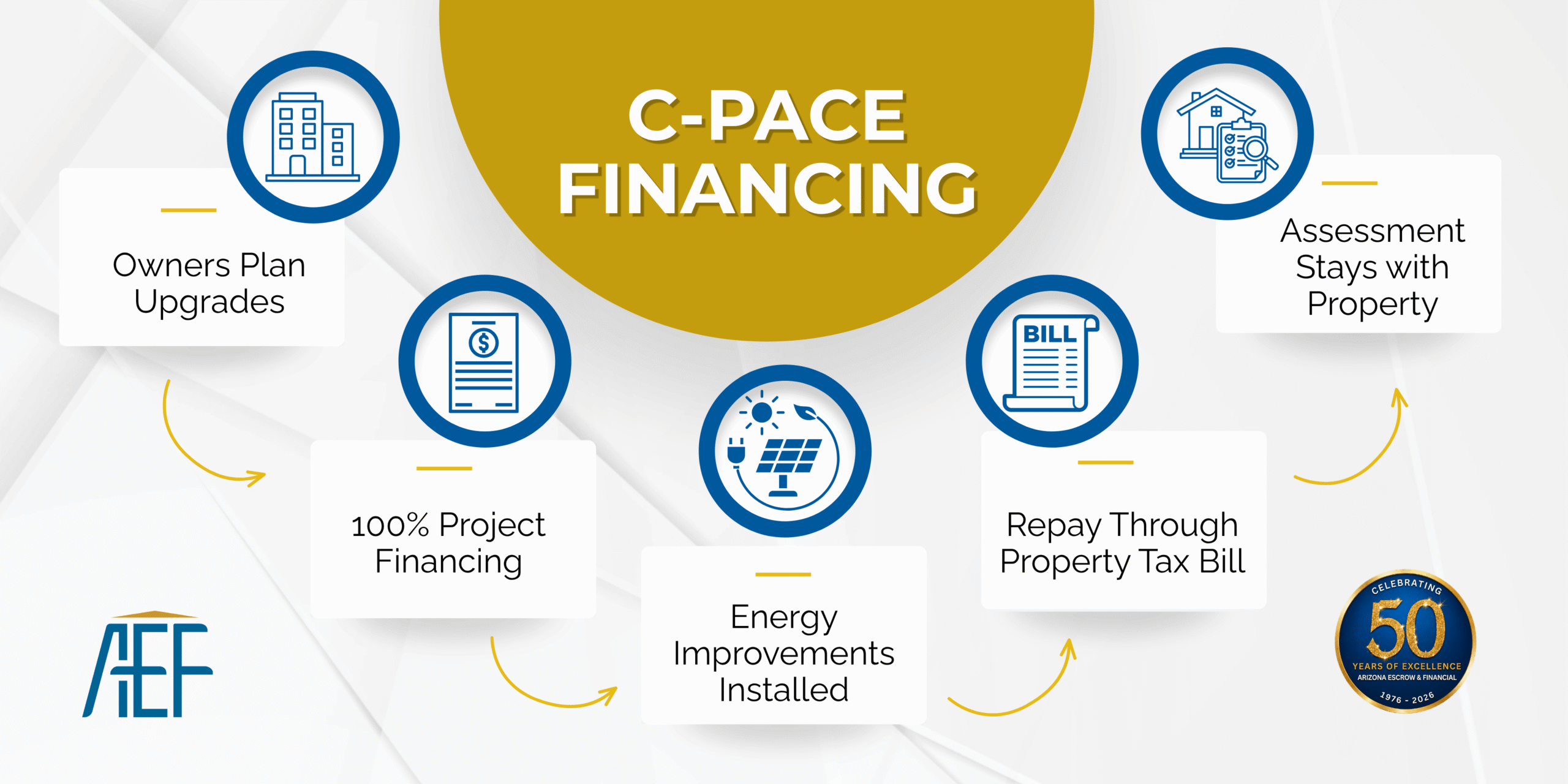
Commercial property-assessed clean energy (C-PACE) financing lets building owners borrow for energy efficiency, renewable energy, or resilience projects, then repay the loan through a special assessment on their property tax bill.
C-PACE can cover up to 100% of project costs with terms stretching 25-30 years. It removes much of the upfront capital barrier tied to major green retrofits while boosting the building’s net operating income through utility savings.
C-PACE financing stays with the property even after a sale, so a buyer takes on the remaining terms.
Escrow Considerations for CPACE Financing
- Lender consent: Because C-PACE assessments often carry a lien priority equal to property taxes, escrow agents confirm that existing mortgage holders have signed off before releasing project funds.
- Tax escrow structuring: Since C-PACE repayments run through the municipal tax system, escrow companies often build these assessments into monthly impound accounts to keep payments on schedule.
- Phased disbursement: Much like asset-based lending draws, retrofit funds are often released in stages, tied to independent engineering or performance verification.
- Legislative framework: Arizona Senate Bill SB1651 established the legal groundwork for C-PACE programs, giving municipalities the authority to set up these structured assessments.
Private Credit / Non-Institutional Lending
As traditional banks pull back from commercial real estate lending, private credit has stepped in to fill the gap. Private debt funds, family offices, and other non-institutional lenders offer tailored capital, short-term bridge loans, and structured debt outside conventional banking frameworks. These options often provide faster execution and more flexibility than a traditional loan.
Escrow Considerations for Private Credit Financing
- Note and lien verification: Private lending often skips standard banking compliance layers, so escrow agents review promissory notes and deed of trust conditions closely to confirm the lender’s exact position in the capital stack.
- Custom disbursement tracking: Private credit transactions frequently involve bespoke covenants and phased draws. The escrow agent acts as a neutral administrator, releasing funds only once specific milestones are met.
- Default monitoring: Private lenders often set tighter default triggers, so escrow closely tracks cross-default provisions, reserve accounts, and collateral pledges.
Trusted Escrow Services for Commercial Closings
Non-traditional financing gives commercial real estate investors more ways to structure a transaction, but each option comes with its own complexity.
An experienced escrow team makes sure contract conditions and phased disbursements get executed as agreed, from the first draft to the final closing.

Have questions about how a non-traditional financing structure could affect your next transaction? Contact Arizona Escrow at (602) 956-2629.
Disclaimer: Arizona Escrow & Financial Services makes no express or implied warranty regarding the accuracy, completeness, or reliability of the information provided and assumes no responsibility for errors or omissions. The information presented is for general informational purposes only and should not be considered legal, financial, or professional advice.
Arizona Escrow & Financial Services, the Arizona Escrow logo, and www.arizonaescrow.com are trademarks or registered trademarks of Arizona Escrow & Financial Services and/or its affiliates. Unauthorized use of these trademarks is strictly prohibited.
For more information, please visit www.arizonaescrow.com or contact us directly.

Monica May-Dunn
Monica May-Dunn is the Owner, CEO, and CFO of Arizona Escrow and Financial Corp., a leading provider of business escrow services since 1976. With over 30 years of industry expertise, she has expanded AEF’s portfolio, driven record growth, and launched a leadership podcast. Recognized as one of AZRE’s “Most Influential Women in Commercial Real Estate 2024,” she is a strategic leader, mentor, and active voice in industry innovation.
Disclaimer: Arizona Escrow & Financial Services makes no express or implied warranty regarding the accuracy, completeness, or reliability of the information provided and assumes no responsibility for errors or omissions. The information presented is for general informational purposes only and should not be considered legal, financial, or professional advice.
Arizona Escrow & Financial Services, the Arizona Escrow logo, and www.arizonaescrow.com are trademarks or registered trademarks of Arizona Escrow & Financial Services and/or its affiliates. Unauthorized use of these trademarks is strictly prohibited.
For more information, please visit www.arizonaescrow.com or contact us directly.