Earlier, we shared a seller-focused guide on the documents needed to sell a business. This time, the focus shifts to the buyer’s side of the transaction.
We sat down with Ryan Armstrong, a seasoned Arizona-based broker, who has spent years guiding buyers through real-world transactions. Drawing from that conversation, this guide brings clarity to a process that’s often more complex than buyers anticipate. It’s all part of our effort to make business transactions and escrow a little less mysterious, with insight from people who do this work every day.
It’s true! Buying a business isn’t just about finding the right opportunity. It’s about paperwork, and lots of it. The documents may not be exciting, but skipping steps here gets expensive fast. And buyers aren’t just evaluating a business. They’re being evaluated, too. What follows in this article is grounded in real transactions and the patterns that show up when buyers are prepared, or not.
When Should Buyers Start Thinking About Documents?
Spoiler: way earlier than most people do!
When is “Too Early” to Start Preparing Buyer Documents?
There really isn’t a “too early.” If you’ve decided you want to buy a business, documents shouldn’t be something you think about later. They should be part of the process from the very beginning. The buyers who struggle are the ones who wait until they’re already under contract to start getting organized. By that point, everything feels rushed.
Being prepared early also signals something important: you’re serious. Buyers don’t realize that they’re auditioning too. Just because you want to buy a business doesn’t mean a seller has to sell that business to you.
What Paperwork Should Be Ready Before You Even Make an Offer?
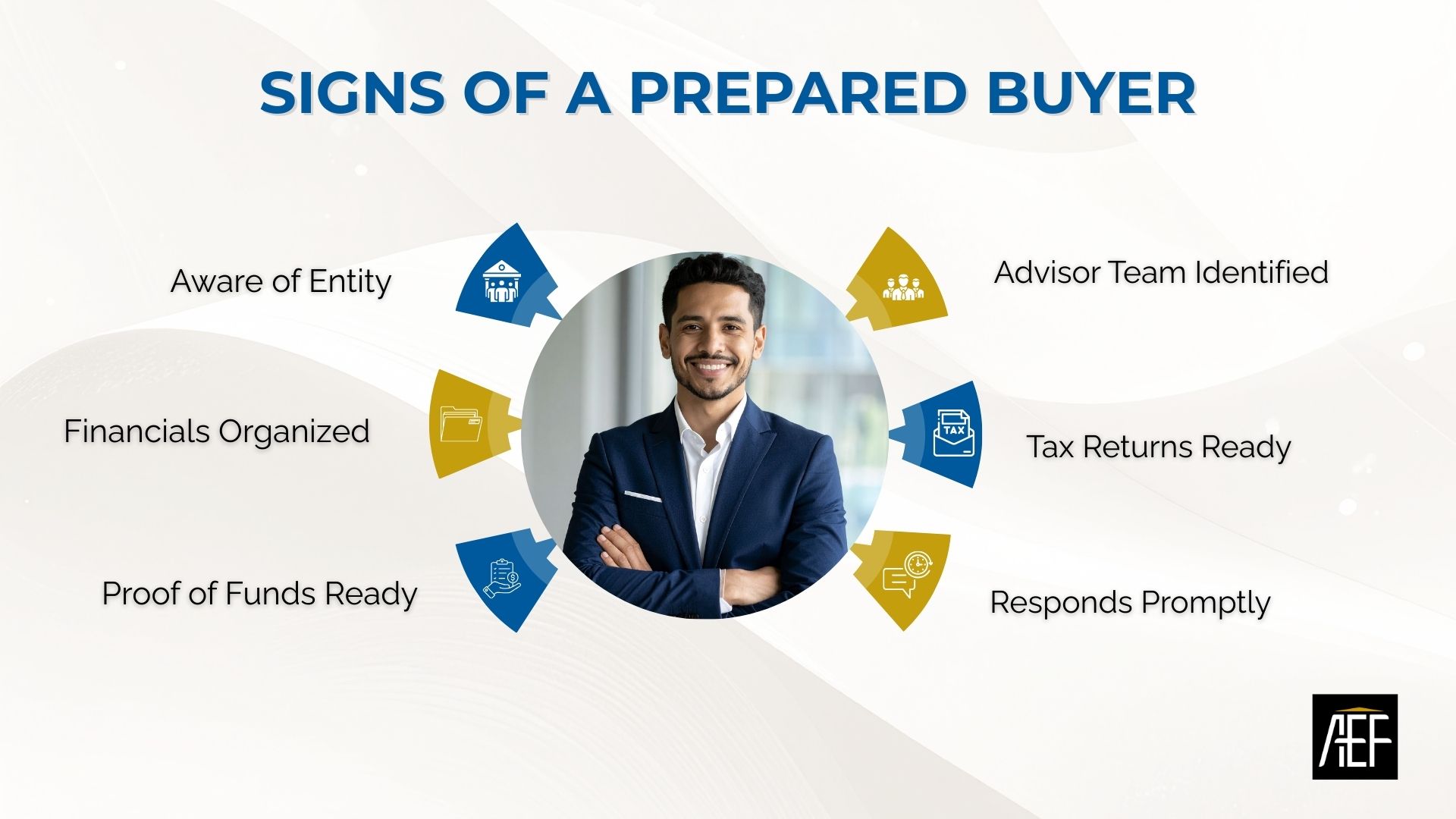
Before submitting a Letter of Intent (LOI), buyers should already have the basics in place. You don’t have to be perfect, but you do need to be ready when the documents are asked for.
At a minimum, that means:
- Knowing what entity you’re buying under
- Having personal financial documents organized
- Being able to show proof of funds quickly
- Having an attorney and lender identified, even if they’re not yet involved
When documents are requested, they shouldn’t take days to track down. They should be easy to produce. Speed matters, especially when good businesses come on the market.
Reality Check: Due Diligence Is a Clock. Due diligence goes fast. People think they have time, and then suddenly they don’t. Buyers often underestimate how quickly that window closes. By the time they’re organized, they’re already behind. Preparation doesn’t remove risk. It gives you time, and time is leverage.
The Documents Buyers Are Asked For First
Yes, they’re personal. It’s understandable to hesitate, but these documents are often a necessary part of keeping the process on track.
What Financial Documents Do Buyers Need to Provide Upfront?
This is usually the first moment buyers pause. Early in the process, buyers are asked to share personal financial information. Not as a formality but because sellers and lenders need to understand who they’re dealing with and whether the buyer can actually support the transaction.
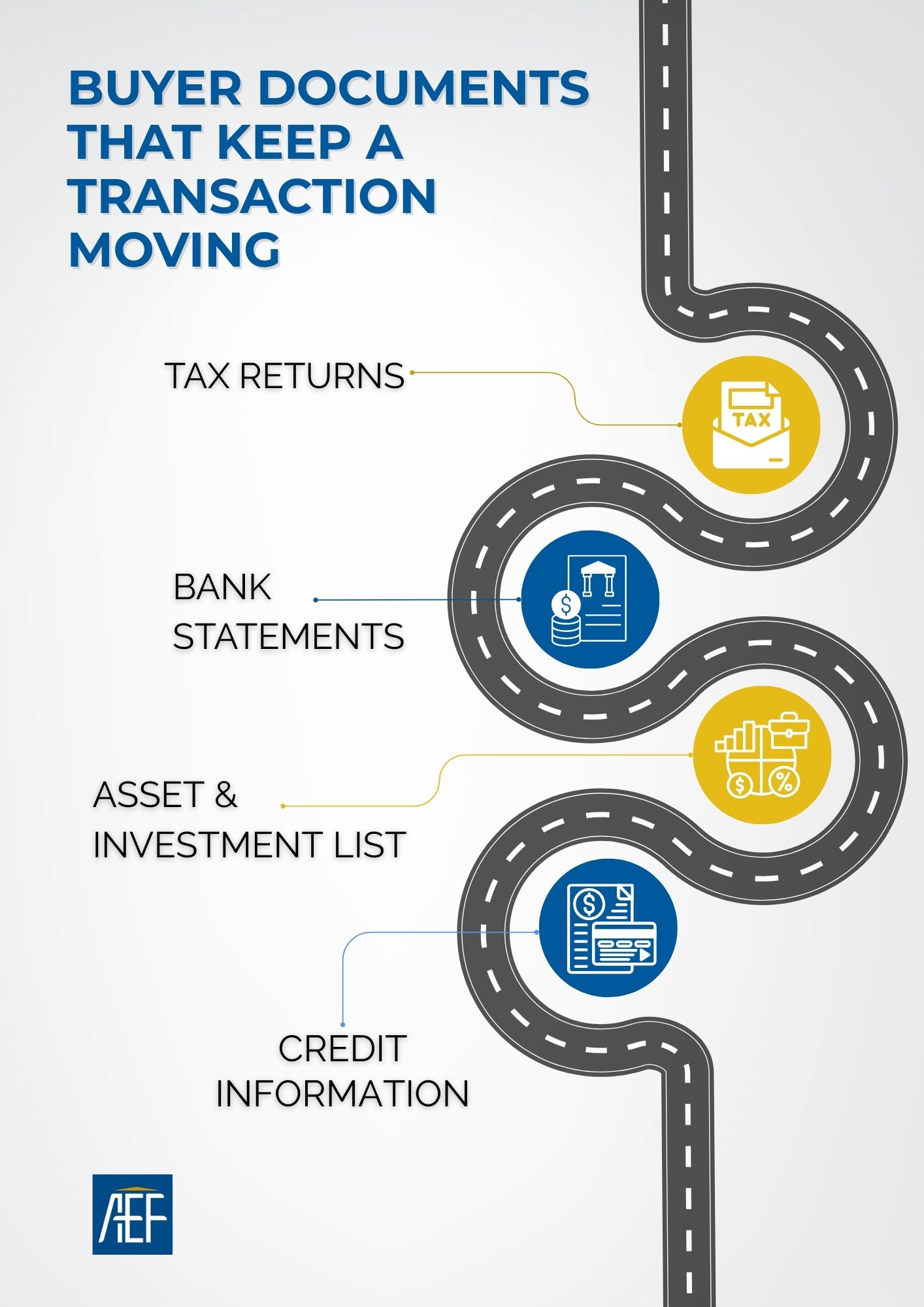
Buyers get surprised by how much personal information they’re asked to provide. But if you’re asking a seller to open up their books, this goes both ways.
At a minimum, buyers should expect to provide a clear picture of their financial position early on.
How many years of tax returns are typically required?
In most cases, buyers are asked for two to three years of personal tax returns.
These aren’t reviewed casually. Tax returns help validate income, consistency, and capacity and they’re often more reliable than summaries or projections.
Tax returns tell the real story. They show what actually happened, not just what someone thinks should have happened. For buyers, this is one of those documents that’s far easier to gather early than under pressure later.
What Does “Proof of Funds” Actually Mean in Real Life?
Proof of funds doesn’t mean showing everything you own. It means showing enough to demonstrate you can complete the transaction. That could include:
- Bank statements
- Investment account summaries
- Other liquid or near-liquid assets
Proof of funds just means you can actually do what you’re saying you want to do. If it takes weeks to get to the money, that’s an issue. What matters most is accessibility.
Why Are Buyers Asked for Asset Lists and Credit Information?
Because buying a business is a financial commitment, not just a signed agreement. Sellers want to know who they’re selling to. Money matters, but it’s not the only thing they’re looking at. Asset lists and credit information help sellers and lenders assess risk. They show how leveraged a buyer is, how flexible their finances are, and whether there’s room to absorb surprises after closing.
Documents Buyers Should Ask Sellers For During Due Diligence
Trust, but verify. Due diligence isn’t just about receiving documents. It’s about asking for the right ones and knowing why they matter.
What should buyers ask sellers for first?
Start with the financial documents that show what actually happened over time. Not projections. Not stories. The real numbers. This usually includes:
- Profit and loss statements (P&L)
- Balance sheets
- Bank statements
These give buyers an initial sense of performance and consistency. But they’re only the starting point.
Why Tax Returns Often Matter More than Internal Financial Statements
Internal financials can be useful, but tax returns tend to carry more weight. Tax returns usually tell the real story. They’re filed under penalty, so they tend to be a lot harder to massage. When the numbers don’t line up across documents, it doesn’t automatically kill a transaction, but it does signal that buyers need to slow down and ask better questions.
What Are the Operational Documents Buyers Cannot Overlook?
Financials show results. Operational documents show how the business actually runs. Things like leases, employees, and vendor relationships can matter just as much as the numbers.
Buyers should pay close attention to:
- Lease agreements
- Employee roles and structure
- Vendor and customer concentration
- Equipment and asset lists
These documents surface dependencies and risks that don’t always show up on a P&L.
Reality Check: UCC Liens Are Easy to Miss and Costly to Ignore
UCC lien searches are one of the most commonly overlooked steps in due diligence. They’re designed to confirm whether business assets are tied to existing loans or claims. When liens are identified early, there’s usually time to resolve them.
This is often where escrow support can be valuable. UCC searches and lien reviews require attention to detail, and many brokers choose to have escrow coordinate these items as part of the overall process.
The Paperwork That Quietly Slows Transactions Down
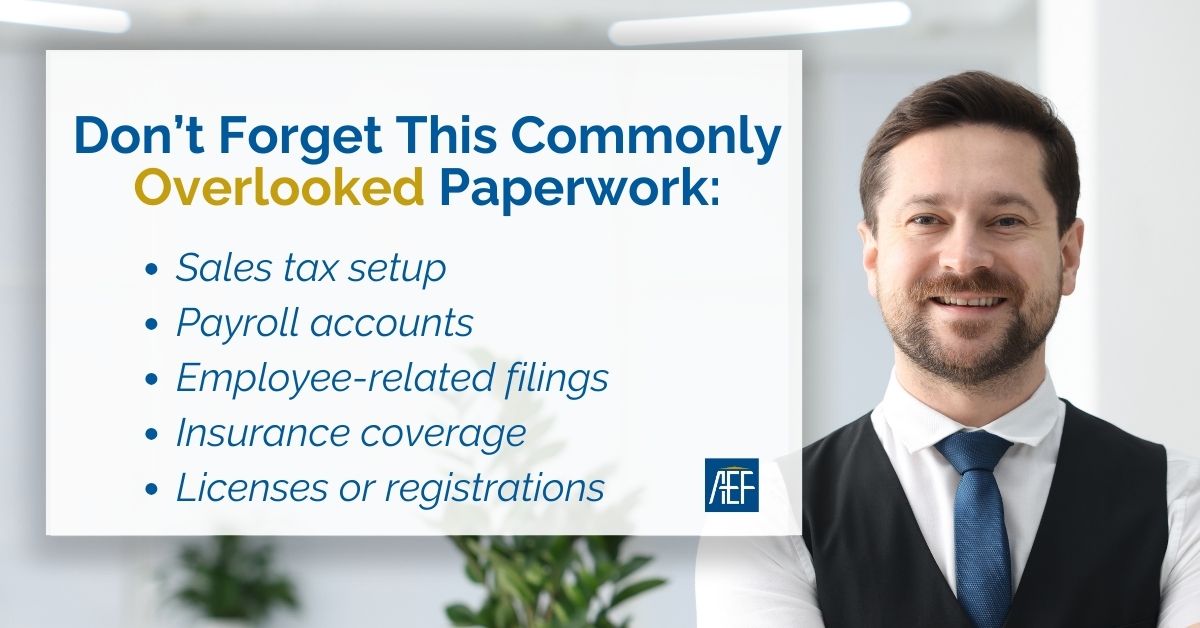
Not all delays come from negotiations or due diligence. Some come from paperwork that buyers don’t realize they need until escrow is already moving. These items tend to surface late; not because they’re complicated, but because they’re easy to overlook.
Common examples include:
- Sales tax setup or transfer requirements
- Payroll accounts and employee-related filings
- Insurance coverage that needs to be in place before closing
- Licenses or registrations that don’t automatically transfer
They’re not diligence documents. They’re operational. But they still have to be handled before the transaction can be completed.
The Legal Documents Buyers Don’t Expect to Sign (But Will)
This is usually the moment buyers pause and say, “Wait, I didn’t know I’d be signing that.” As a transaction moves forward, buyers are often asked to sign more legal documents than they anticipated. Not because something is wrong, but because lenders, sellers, and escrow all need clarity around responsibility and risk.
Personal Guarantees Are More Common Than Buyers Expect
Even when a buyer is purchasing through an entity, personal guarantees frequently come into play. People assume the LLC is the shield. And it is, but lenders still want someone personally standing behind the transaction.
Why Spouses Sometimes Have to Sign
Another moment that catches buyers off guard: spousal signatures. This one really throws people. They’ll say: “My spouse isn’t involved in the business.”
This isn’t about involvement. It’s about liability. In many cases, spousal signatures are procedural. They help confirm community property rights, guarantees, or ownership interests, depending on how the transaction is structured. It’s not a reflection of control. And it’s not unusual.

How Documents Actually Protect Buyers
This is where the paperwork earns its keep. Reviewed the right way, documents don’t just confirm details. They reveal patterns, surface risk, and give buyers a chance to slow down before committing to something they can’t undo.
Documentation protects buyers in 4 key ways:
1 - Validate reality
Documents confirm whether a business is performing the way it’s being described. Looking at tax returns, bank statements, and financials together helps buyers see what’s recurring, what’s seasonal, and what might be overstated.
2 - Expose inconsistencies
When documents don’t line up, it’s rarely subtle. Differences between tax returns, internal financials, and bank activity don’t automatically kill a transaction, but they do change the conversation.
3 - Surface hidden risk
Some risks aren’t obvious in discussions or walkthroughs. They show up only when documents are reviewed side by side. Liens, obligations, and operational dependencies often live in the details.
4- Create leverage before closing
Issues found early can usually be addressed. Issues found late become expensive. Documentation gives buyers time, options, and leverage before closing—when adjustments are still possible.
You’re Not Doing This Alone
Buying a business comes with a lot of paperwork. That part is unavoidable. What is avoidable is trying to manage all of it by yourself.
Brokers, attorneys, CPAs, and a business escrow company that specializes in the complexity of these transactions each play a role in keeping documents aligned. Transactions don’t usually fall apart because of one big problem: it’s the small, uncoordinated things that cause trouble.
Having each of these experts in your corner can make sure your transaction closes cleanly, correctly, and with fewer surprises.
Because when the right people are involved at the right time, purchasing a business will be the exciting adventure that you hoped it would be.

Transactions are only the beginning. What happens after closing often determines long-term success.
Ryan also sat down with Monica on the Practical and Positive Leadership podcast to discuss Good to Great and the leadership principles that separate enduring companies from the rest.
🎧 Listen here.
Disclaimer: Arizona Escrow & Financial Services makes no express or implied warranty regarding the accuracy, completeness, or reliability of the information provided and assumes no responsibility for errors or omissions. The information presented is for general informational purposes only and should not be considered legal, financial, or professional advice.
Arizona Escrow & Financial Services, the Arizona Escrow logo, and www.arizonaescrow.com are trademarks or registered trademarks of Arizona Escrow & Financial Services and/or its affiliates. Unauthorized use of these trademarks is strictly prohibited.
For more information, please visit www.arizonaescrow.com or contact us directly.

Ryan Armstrong
Ryan Armstrong, CBI, serves as President of Transworld Business Advisors Phoenix and President of the Arizona Business Brokers Association. He advises business owners on valuations, acquisitions, and exit strategies, guiding transactions from initial preparation through closing. With years of operational and brokerage experience, Ryan provides practical insight into what makes businesses transferable. He is based in Goodyear, Arizona. rarmstrong@tworld.com (602) 551-6604
Disclaimer: Arizona Escrow & Financial Services makes no express or implied warranty regarding the accuracy, completeness, or reliability of the information provided and assumes no responsibility for errors or omissions. The information presented is for general informational purposes only and should not be considered legal, financial, or professional advice.
Arizona Escrow & Financial Services, the Arizona Escrow logo, and www.arizonaescrow.com are trademarks or registered trademarks of Arizona Escrow & Financial Services and/or its affiliates. Unauthorized use of these trademarks is strictly prohibited.
For more information, please visit www.arizonaescrow.com or contact us directly.